Om Banna Temple (A TEMPLE TO A MOTORBIKE)


Now let us discuss the history of this temple         

History

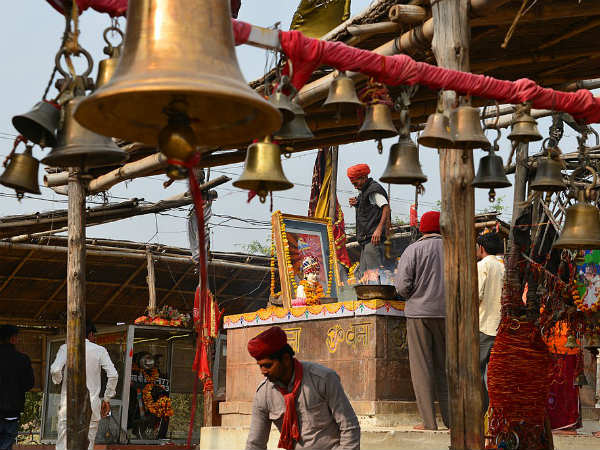
On 2 December 1991, Om Banna (formerly known as Om Singh Rathore)] was traveling from the town of Bangdi near Sanderao of Pali to Chotila, when he lost control of his motorcycle and hit a tree. He died instantly and his motorcycle fell into a nearby ditch. The morning after the accident, local police took the motorcycle to a nearby police station. The next day it was reported to have disappeared from the station and was found back at the site of the incident. Police, once again, took the motorcycle, this time emptying its fuel tank and putting it under lock and chain to prevent its removal. Despite their efforts, the next morning it again disappeared and was found at the accident site. Legend states that the motorcycle kept returning to the same ditch.  Every attempt by police to keep it at the local police station; the motorcycle always returned to the same spot before dawn.This came to be seen as a miracle by the local population, and they began to worship the “Bullet Bike.” News of the miracle motorcycle spread to nearby villages, and later they built a temple to worship it. This temple is known as “Bullet Baba’s Temple.” It is believed that Om Banna’s spirit helps distressed travelers. 


Worship

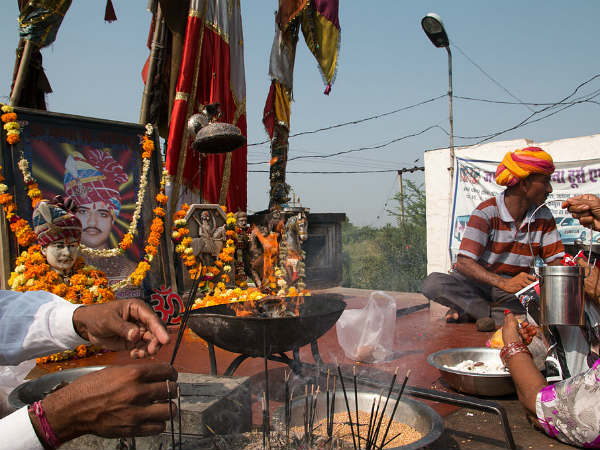
Every day nearby villagers and travelers stop and pray to the bike and its late owner Om Singh Rathore. Those who pass by stop to bow their heads leave offerings in honor of the helpful spirit, and some drivers also offer small bottles of alcohol at the site. It is said that a person who does not stop to pray at the shrine is in for a dangerous journey. Devotees also apply the ’tilak’ mark and tie a red thread on the motorbike. Local people sing folk songs in the name of Om Banna.
Best Time To Visit Om Banna Temple

Located in Rajasthan, it experiences an extreme type of climate, and hence the summers are very hot here. Therefore, a visit to Om Banna Temple during the summer season is never an option for tourists. The best time to visit it is from September until the end of March when the climate is cool and pleasant enough to explore its beauty comfortably

How To Reach Om Banna Temple

By Air: The nearest airport to Om Banna Temple is located in Jodhpur at a distance of around 53 km. Once you have reached Jodhpur, you can either hire a bus or catch a direct cab to the temple. It will take you an average time of 1 h to reach your destination from Jodhpur.
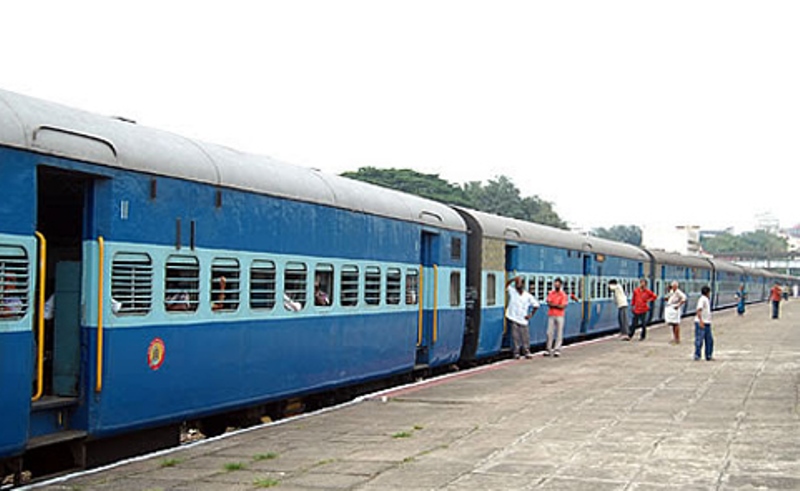
By Rail: If you desire to travel by rail, then you can take a direct train to Pali Junction and then from there, a bus or a cab to Om Banna Temple. The distance between the station and the temple is about 22 km.
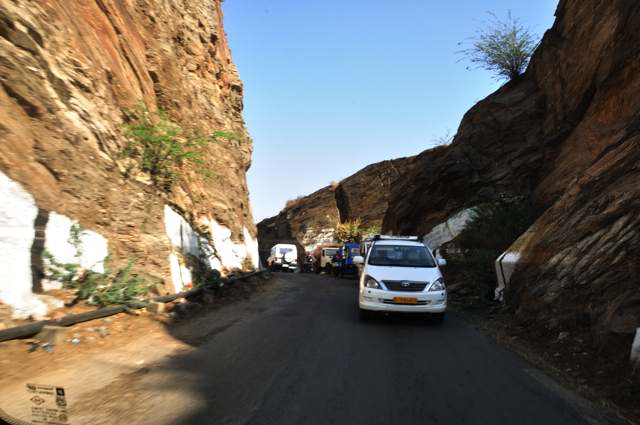
By Road: Located in the vicinity of National Highway 62, Om Banna Temple is easily accessible by road.
fees: there is no charges applied to visit the temple
Guys blog pasand aaya toh comment karke batana or keep increasing the blogger family.keep supporting me.
                                                           Thank you 
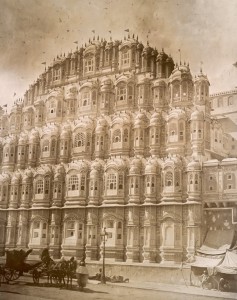
Hawa Mahal , Jaipur

                                          🔻 HAWA MAHAL🔺

GO AT THE LAST OF THE PAGE TO GET THE BONUS FACTS ABOUT HAWA MAHAL.
AND ALSO COMMENT DOWN ABOUT THE INFORMATION WHICH CAN BE ADDED IN THIS BLOG ABOUT HAWA MAHAL.

History

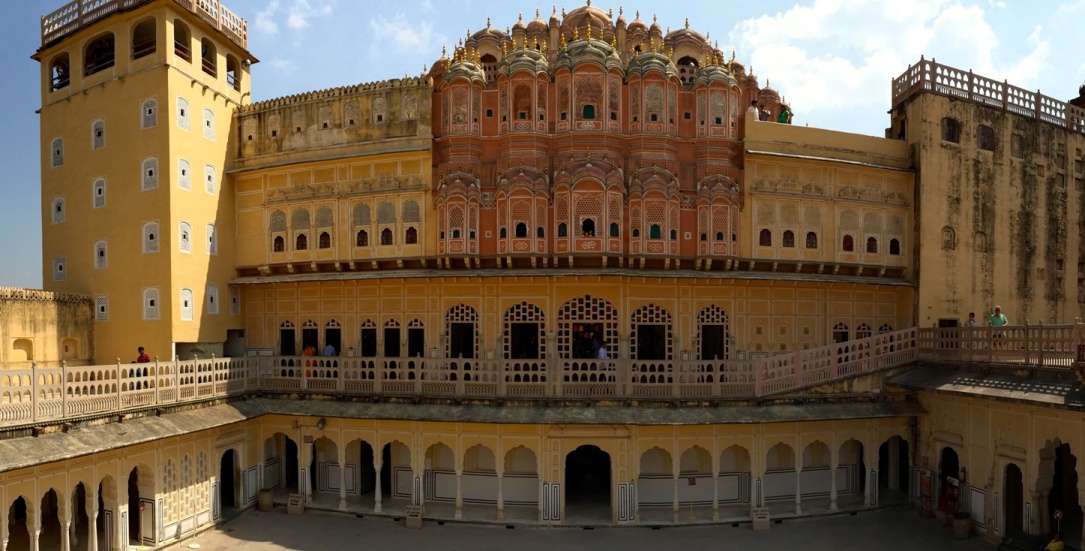
In 1799, the Kachhwaha Rajput ruler, Sawai Pratap Singh, grandson of Maharaja Sawai Jai Singh ordered Lal Chand Usta to construct an extension to the Royal City Palace. The Purdah system at the time was strictly followed. Rajput royal ladies should not be seen by strangers or appear in any public area. The construction of Hawa Mahal allows the royal ladies to enjoy from everyday street scenes to royal processions on the street without being seen.

Architecture

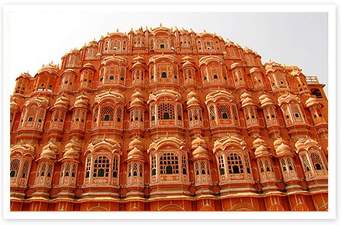
The five-story palace was built in the form of Krishna’s crown because Sarai Pratap Singh was devoted to Krishna, the Hindu god.
The mahal has a total of 953 small casements each with small lattice worked pink window, balconies and arched roofs with hanging cornices. This allows cool breeze blow through the mahal and keeps it cool and airy in summer. Despite a large number of windows, each of them is the size of a peephole such that the royal ladies were not to be seen by the public.
The top three stories are a single room thick, namely Vichitra Mandir, Prakash Mandir, and Hawa Mandir. The Maharaja worshipped the Krishna at the Vichitra Mandir. while the Prakash Mandir provides an open terrace to both sides. Worth noting is that there are no steps to the upper floors but ramps. They are for the palanquin of the royal ladies.
The autumn celebrations took place on the Sharad Mandir on the first floor. Don’t miss out on the colorful glassworks on Ratan Mandir on the second floor.
Contrast to the rich decoration of the exterior, the interiors of the Mahal is much simpler. But it is also where you will find the best view of the city of Jaipur.

Best time to visit

The best time to visit Hawa Mahal is in the early morning when the sun enters the rooms from the windows. The Mahal is illuminated with golden sun lights.

Fast facts of Hawa Mahal, the Palace of Breeze

Q: When was it built?
A: Hawa Mahal was built in 1799 A.D by Maharaja Sawai Pratap Singh.
Q: Where is the entrance?
A: The entrance is through the City Palace where doors open into an open spacious courtyard with two-storeyed buildings on three sides.
Q: How many windows are there in Hawa Mahal?
A: There are 953 windows.
Q: Do you know that Hawa Mahal has no foundation?

A: That’s correct.  Hawa Mahal was built without foundation.  In fact, it is the tallest building in the world without a foundation.  The five-story building managed to maintain upright because it is curved shaped.  Just another masterpiece of Rajput and Mughal architecture.
Q: What is the meaning of Hawa Mahal?
A: The word “Hawa” means wind or breeze and “Mahal” is a palace.  So Hawa Mahal is the palace of breeze.
Q: Who designed the mahal? A: It was designed by Lal Chand Usta in 1799 by the order of Maharaja Sawai Pratap Singh.
Q: What is the purpose of building Hawa Mahal?
A: Royal ladies were not to be seen by the public.  The palace was built such that the ladies can watch festival celebrations and all other activities on the street without being seen.
Q: Why are there so many windows?
A: There are two purposes for the seemingly excessive number of windows.  First, when there are windows everywhere, the royal ladies can look out to the street anywhere they want.  Secondly, the windows allow the breeze to flow through and help to keep the palace cool. It thus makes it an ideal summer palace.
Q: What style of architecture is it?
A: Hawa Mahal exhibits a unique combination of Mughal and Rajput architectural styles.
Q: What is it made of?
A: Hawa Mahal is carved out of red and pink sandstone.
Q: Does it relate to any god?
A: The palace is devoted to Krishna and thus in the shape of Lord Krishna’s crown.


                                                 About Hawa Mahal

                                                                                       Hawa Mahal, also          known as “Palace oFBreeze”, was built in 1799 as an  extension  to the Royal City Palace of Jaipur. It allows the royal ladies who at the   time strictly observed “pardah”, to be  to watch any processions and activitives on  streets.

Opening Hour and fees                           

                                                                                   Opening Time: 9:00am. – 4:30p.m.
                                                                                                 Entrance Fees:
                                                                                   Indian: Rs.10,  Foreigners: Rs.50

BONUS FACTS ABOUT HAWA MAHAL 

1. Shaped like a Crown Hawa Mahal is built in the shape of a crown, it looks like Lord   Krishna’s crown. Sawai Pratap Singh was believed to be a great devotee of Lord Krishna.   His passion became the reason behind this design.

2.The Wind Palace Hawa Mahal means the ‘Palace of Winds’ or the ‘Wind Palace’. It has 953 small windows (Jharokas), they were built to keep the wind blowing inside the palace. It was a summer retreat for many Rajputs families during olden times. Hawa Mahal is one of the major attractions in Jaipur.


3. Looks like a Honey Comb The facade of the building is structured like a bee hive. The intricately designed windows allowed the royal women to watch the bustle of the city, without being visible to the public.
4. No Front Entrance Hawa Mahal doesn’t have a direct entrance; one has to enter from the side of City Palace. Hawa Mahal was built as a part of the City Palace, so there is no entrance from outside.

BHANGARH; The most haunted fort in India [MYSTREY]

                               ←←←←   Bhangarh  →→→→


My experience in fort ——
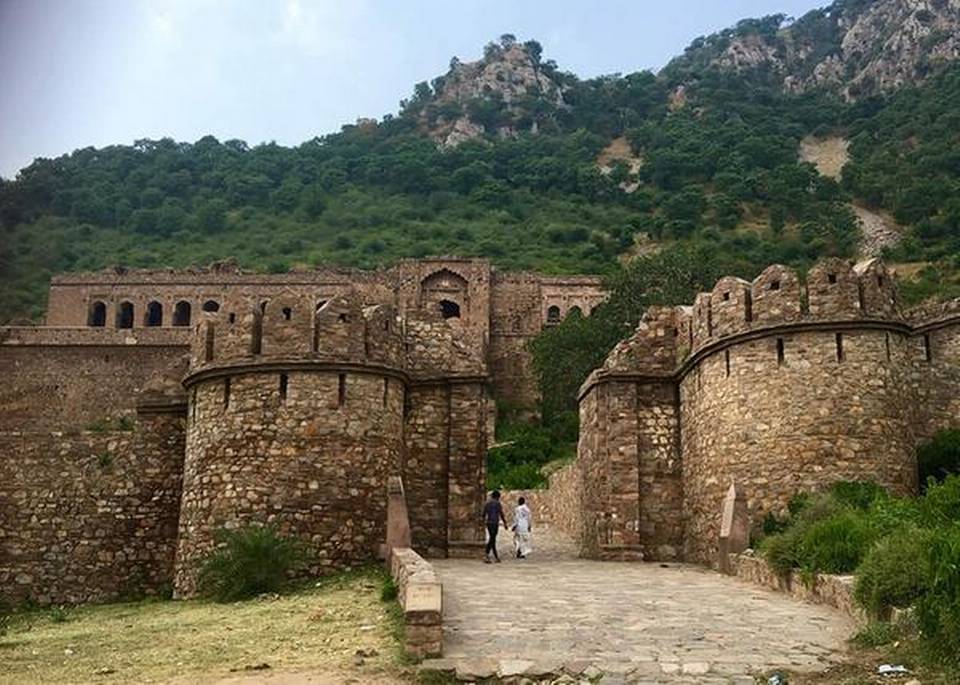
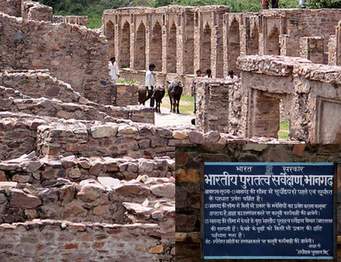
Hello, guys today we are going to travel the most horror place of Rajasthan, which is located at alwer district from the Sariska Tiger Reserve, we passed by the Ajabgarh fort. Since the entry into Bhangarh is restricted after sunset, we were in a hurry. I didn’t climb up the Ajabgarh fort, but I explored its base. A local lad grazing sheep told me that there was nothing that I would be able to see from below except the four walls. If I had known its significance in the destiny of the fort I was going to, I would have made more of an effort.The drive to Bhangarh fort was eerie. We passed through a village that was ostensibly inhabited. The main road was lined with the ruins of once-beautiful havelis. Children were seated in front of intricately carved wooden doors that had large rusted locks. The Bhangarh fort was built by the Kachwaha ruler of Amber, Raja Bhagwant Singh, for his younger son Madho Singh in 1573 AD. Madho Singh’s brother was the celebrated Man Singh, who was Akbar’s general. Madho Singh was succeeded by his son Chatr Singh. It was Chatr Singh’s son Ajab Singh who built the fort of Ajabgarh.

A tantrik’s curse


The guide told us of the beautiful princess Ratnavati, who was the daughter of Chatr Singh. She was the jewel of Rajasthan. Ratnavati was much younger than her stepbrother Ajab Singh, and was as universally liked as he was disliked. Tales of her beauty and delightful temperament spread far and wide and she received many marriage proposals. A tantrik priest, who was well versed in black magic, fell in love with her. But knowing that he didn’t stand a chance with the beautiful princess, he tried to cast a spell on her. Seeing the princess’ maid buying perfume for her in the village, he cast a spell on it so that Ratnavati would fall in love with him. Ratnavati came to know of this and threw the bottle. It turned into a boulder and hit the tantrik. He was crushed under its weight, but before he died, he cursed the princess, her family, and the entire village. The next year, a battle was fought between the forces of Bhangarh and Ajabgarh, which led to the death of Ratnavati and most of the army.
The guide solemnly told us that it was due to this curse that no one in the village or fort could be reborn; it is forever condemned to desolation and is inhabited by ghosts. If any villager tries to build a roof, it apparently mysteriously collapses.
We were told another story too. Apparently there was a sadhu, Guru Balu Nath, living on top of the hill on which Raja Bhagwant Singh built the fort. His only condition for letting the fort be built there was that it should never cast a shadow on his dwelling. This condition was honoured by all except Ajab Singh, who added columns to the fort that cast a shadow on the ascetic’s house. The angry sadhu’s curse led to the ruin of the fort and the surrounding villages. A small stone hut, known as tantrik ki chatri, overlooks the fort.
The truth seems to be that after Chatr Singh’s death, since Ajab Singh had already established a new fort, the population of the area dwindled. A famine in 1783 forced the remaining villagers to seek new avenues. In 1720, Raja Jai Singh, grandson of Man Singh, attached Bhangarh to his estate.

How to Reach Bhangarh and Nearby Places

By Road: Bhangarh Fort, also known as the Bhangarh Ka Kila is around 300 kilometers away from Delhi, and the best idea is to leave early in the morning and drive so that you are done by sunset. Do not let the bumpy roads deter you. Moreover, you should ideally rent a car that can also take you around Sariska/Jaipur/Alwar/Neemrana. Depending on the vehicle you hire, the entire trip should cost you anything between 10,000 to 15,000 Rupees.
By Rail: Alternatively, you could take the Shatabdi Express from New Delhi to Alwar and then take a taxi right up to the Bhangarh Ka Kila. However, bookings for the train need to be made in advance. Remember that Bhangarh has no hotels or restaurants and you would, therefore, have to travel quite a bit for accommodation options. Packing some food for the trip is a wise thing to do although it is not difficult to find a few dhabas along the way.

Is the Bhangarh Fort haunted? Here is the story of Bhangarh:

Most people are of the belief that Bhangarh Fort is haunted and there is no dearth of tales that help in amplifying the mystery that is Bhangarh. Venturing into the fort after sunset is nothing short of an act of bravery as it is supposed to be a center for paranormal activity and the Archaeological Survey of India, therefore, has prohibited people from visiting the Bhangarh Fort at night.
Of the many Bhangarh stories that the locals like to indulge in, the most popular is that of Emperor Madho Singh who built the city after attaining the approval of Guru Balu Nath, an ascetic who used to meditate there. The saint gave his approval on the condition that the shadow of the Emperor’s palace should never fall on his retreat.
If in case it did, the city would crumble into ruins. Once the construction was completed, the retreat of Guru Balu was unfortunately shadowed by the palace. Having incurred the saint’s wrath, Bhangarh immediately transformed into a cursed city and could never be rebuilt as no structures ever managed to survive in it. It is interesting to note that the tomb of Guru Balu Nath can still be found among the ruins.
IF YOU LIKE THIS BLOG GO CHECK OUT VIDEO AND COMMENT DOWN BELOW.
THANK YOU


Dargah Sharif Ajmer and amazing facts

Dargah Sharif Ajmer


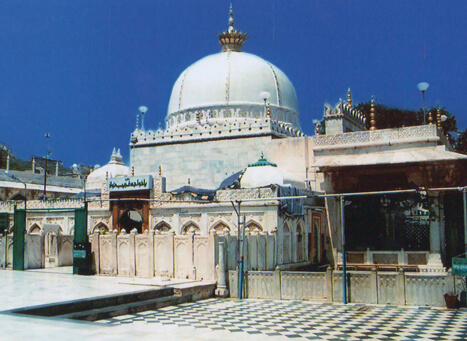
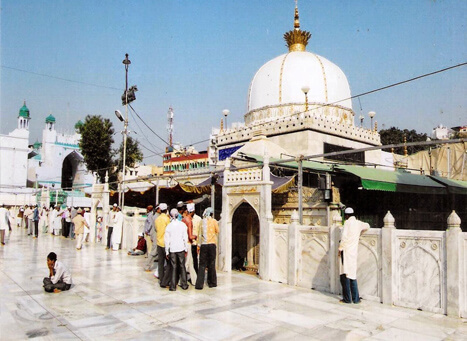
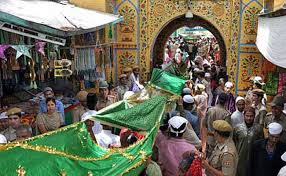
It is believed that a person who prays with a pure heart at the Ajmer Sharif Dargah, gets all his or her wishes fulfilled. Ajmer Sharif is a Sufi shrine and one of the most visited places in Ajmer. The pious Persian Sufi saint, Khwaja Moinuddin Chishti who is well-known for its secular preaching is enshrined here. Many Muslims believe that Moinuddin Chisti was Muhammad’s direct descendant and it was on his request (Muhammad came to his dream) he went to India. He reached Ajmer in 1192 via Lahore and stayed there till his death in 1236 AD.
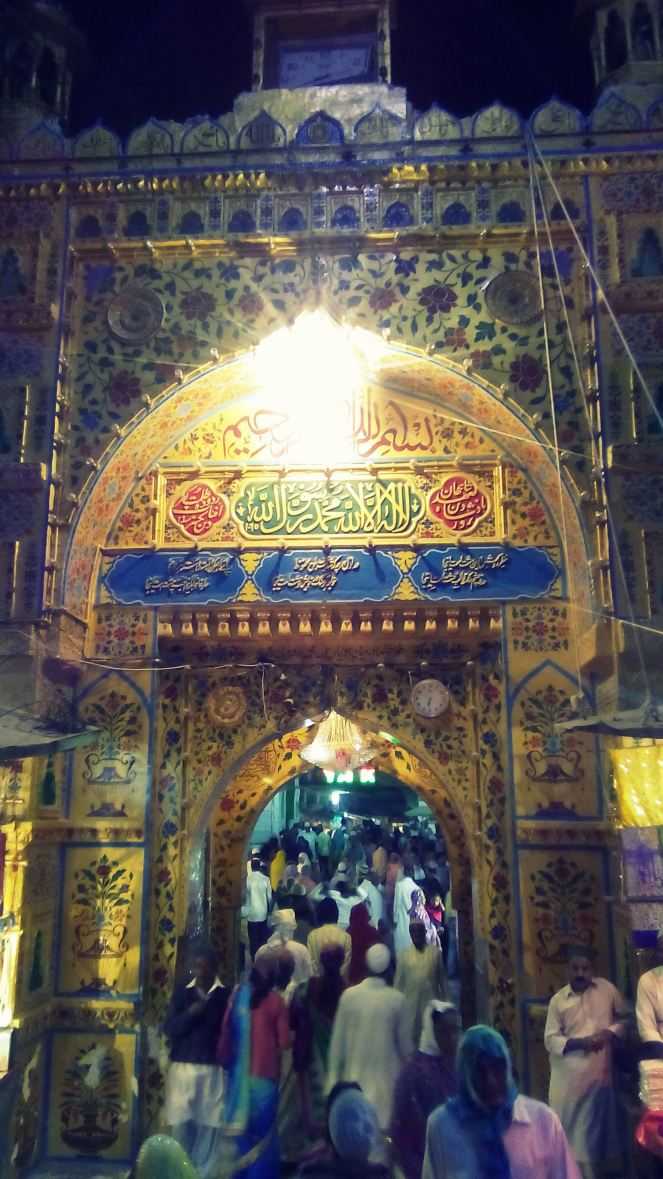
His shrine was built by Mughal Emperor Humayun, and in order to enter the dargah, you need to go through a series of massive doors made from silver with beautiful carvings. As you reach the courtyard, you would come across the tomb of Moinuddin Chishti, carved out of marble. It has gold plating on the top and is guarded by a railing made from silver and a marble screen.
There are several mosques inside the dargah complex, built by Akbar and Shah Jahan, who made it a point to visit Ajmer at least once a year.
The place is an architectural marvel and perfect for connecting to your spiritual self. You do not have to be religious in order to visit this place. The peacefulness and serenity of this place is something that you would not get anywhere else.

THINGS TO DO IN AND AROUND

Ajmer has a lot to offer apart from the Ajmer Sharif Dargah. Adhai-din-ka-jhonpra is another important tourist destination of Ajmer. Located on the outskirts of the city, this is the ruin of a mosque that goes by the same name. It was converted into a mosque 1198 from a Sanskrit College and a wall was added consisting of seven arches.
The Nasiyan temple is another place that can visit. Also, known as the Golden Temple of Ajmer, it is a two-story temple and is decorated extensively with precious stones and gold and silver.

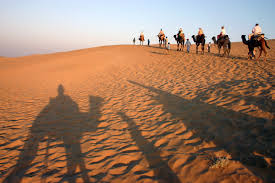
The best way to enjoy the landscape of Ajmer is by going for a camel safari in Pushkar. You would also enjoy shopping along the streets of the city. Embroidered dupatta, jodhpuri jutis, and silver jewelry are famous for Ajmer.

amazing facts about Ajmer Dargah Sharif

Ajmer Sharif Dargah is a ‘Must Visit’

Dargah Sharif or Ajmer Sharif is one of the most sanctified shrines in the country. Located in the heart of Ajmer, this dargah is venerated by both Muslims and Hindus. Here are 10 interesting facts about Ajmer Sharif that will surprise you…

5Mughal Emperor

Nizam Sikka, an ordinary water carrier, once saved Mughal Emperor Humayun’s life. As a reward, he was granted the right to rule the Mughal Empire for a day. The tomb of Nizam Sikka is located inside the Dargah Sharif.

Jantar Mantar Jaipur

HELLO, GUYS IN THIS BLOG I AM GOING TO GIVE YOU INFORMATION ABOUT THE HISTORICAL ARCHITECTURE MONUMENT LOCATED AT JAIPUR WHICH IS THE LARGEST OBSERVATION EVER BUILT. FOR FULL DETAILED INFORMATION READ THE BLOG ——–
                             

Jantar Mantar Jaipur


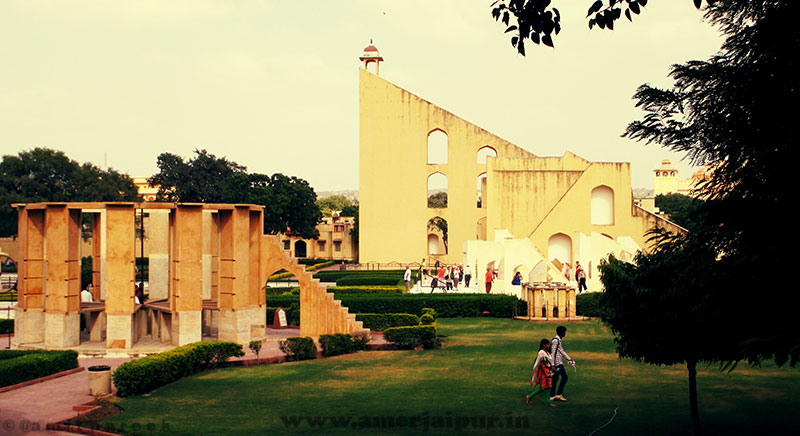
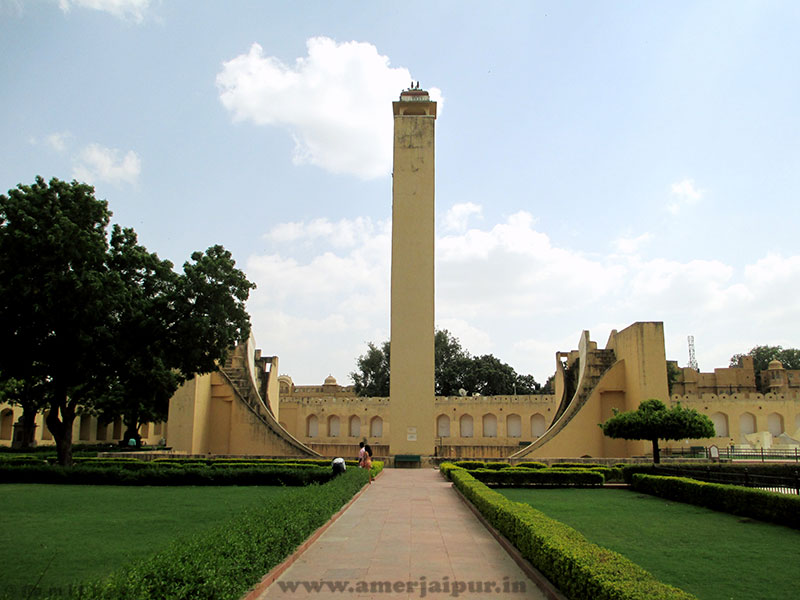
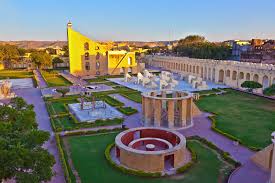
“Jantar Mantar” these two magical and mysteries words chanting in India by many people in their childhood to fulfill their magical dreams but these words are more than that. The term “Jantar Mantar” literally means “instruments for measuring the harmony of the heavens”. In Jaipur city, there are palaces, temples, gardens, and ponds they all have their importance in their place but the astronomical observatory established by the king Sawai Jai Singh have International importance. The Jantar Mantar houses various architectural and astrological instruments that have caught the interests of astronomers, historians, and architects around the world. It is considered to be one of the largest observatories ever built.

Why was Jantar Mantar built?

NOW WE HAVE THE QUESTION THAT WHY IS THIS BEAUTIFUL MONUMENT BUILT?
DONT WORRY HERE IS THE ANSWER TO THE QUESTION ———
This observatory was built in 1734 for the study of space and time. The builder of the Jantar Mantar Maharaja Sawai Jai Singh was a brilliant star and great scholar of his subjects like astronomy and Indian politics. He is the ruler of Amber and founder of Jaipur, a great builder and ruler and exceptional astronomer. Sawai Jai Singh II was commissioned by Emperor Muhammad Shah, to make corrections in the astronomical tables and to confirm the data, already available on the planetary positions.

LET US KNOW THE HISTORY

The main aims of Jai Singh II scientific program were to refine the ancient Islamic tables, to measure the exact hour at continuously and to define the calendar precisely. Another aim was to apply the cosmological vision deriving from the Ptolemaic one based upon astronomical facts to astrological prediction both social and individual. Sawai Jai Singh is aware of the Hindu tradition of astronomical data and he also studies all the astronomy-related books and data of Europeans, Islamic and Persian civilization and collects all the data and adopts the data. That helps him for building an observatory. For collecting data Sawai Jai Singh II sent his envoys to various parts of the world. The emissaries came back with manuals and astronomical tables besides tones of data on the advances made in the fields of astronomy. La Hires’s tables were one of these manuals. The Jantar Mantar is also called the renewal edition of the observatory of the king Ulugh Beg ruler of Samarkand 1339-1449 at Uzbekistan. But it was more accurate compared to Ulugh Beg observatory. Where Ulugh beg observatory is called a “mistake of its time”. The first prime minister of India Pundit Jawaharlal Nehru wrote: “not a mistake of its time”.

It took seven years to finish the task. He built the first stone observatory in 1724 in Delhi. The Jaipur observatory of Rajasthan was built in 1728-1734. The king Sawai Jai Singh built three more observatories in various places. The Jaipur observatory is the largest and more accurate than others.

Jantar Mantar is the most complete and best preserved great observatory site built in the Ptolemaic tradition. It provides an outstanding testimony of the scientific and technical conceptions of the great observatory devised in the medieval world.

              NOW THE QUESTION IS HOW TO GO THERE

DONT WORRY

How to Reach Jantar Mantar

This astronomical observatory is located at the heart of the city and is walking distance from the city palace.

Best Time to Visit the Jantar Mantar, Jaipur

Visiting the Jantar Mantar during mid-day is most advisable. The sun will be right above your head and hence you will be able to understand how the readings are taken for each instrument.

Most Significant Aspect of Jantar Mantar

The light and sound show at the Jantar Mantar is definitely worth your time. It explains the history behind the city of Jaipur and why the Jantar Mantar was constructed. The vivid colors and creative narration will really make you appreciate the beauty of this scientific instrument. It is best to couple this visit with the city palace and Hawa Mahal. The observatory is closed for about an hour in light of preparation for the light and sound show. You can take a walk through the market and shop while you wait for the show timings.
Planning to explore the Jantar Mantar, We have specially designed 3 Days Private Jaipur Tour from Delhi to explore this historical place along with other major attractions of Jaipur.
  •  FeeINR 200 for Foreign Tourists and INR 50 for Indians
  •  Visiting TimeAll days 9:00 AM – 5:00 PM
           IF YOU LIKE THIS INFORMATION PLEASE COMMENT DOWN BELOW.
                                                THANK YOU 

The 10 Best Pushkar Tours 2019 – Rajasthan

                                                  PUSHKAR

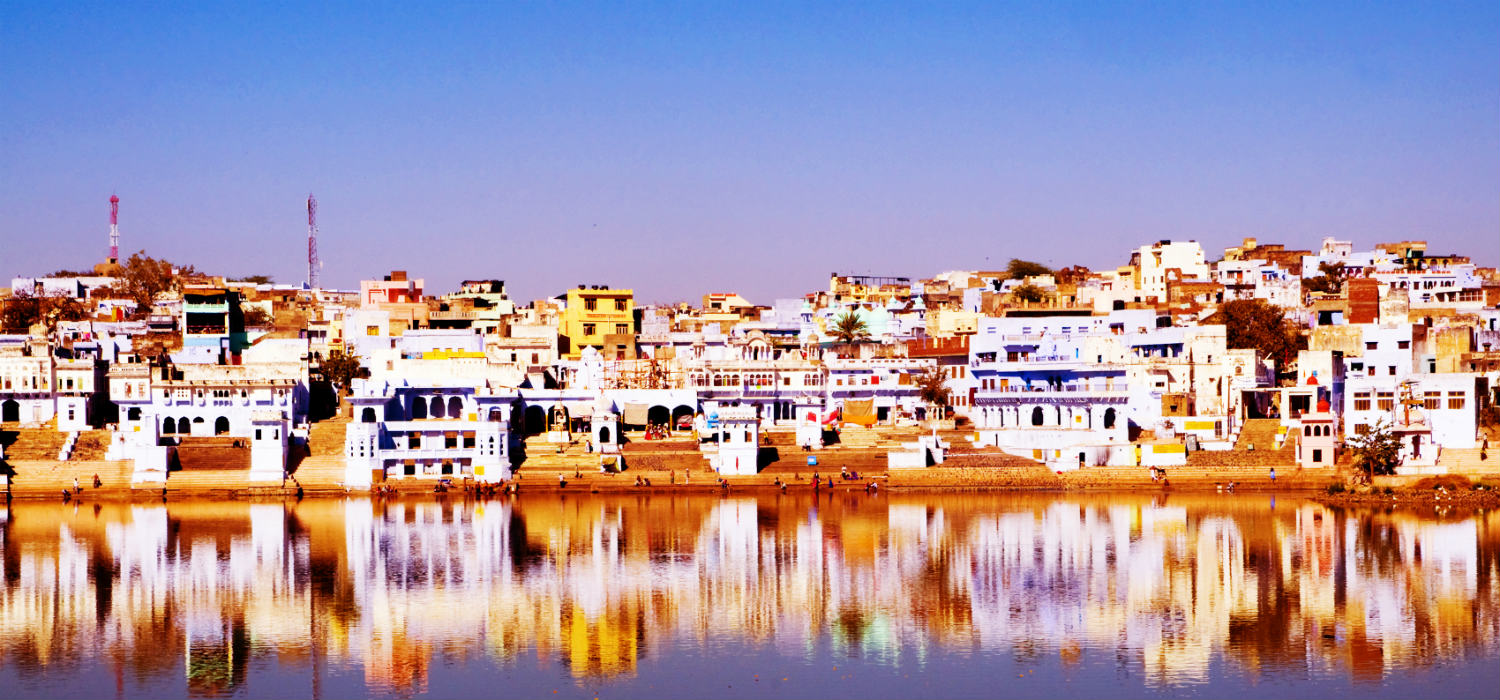
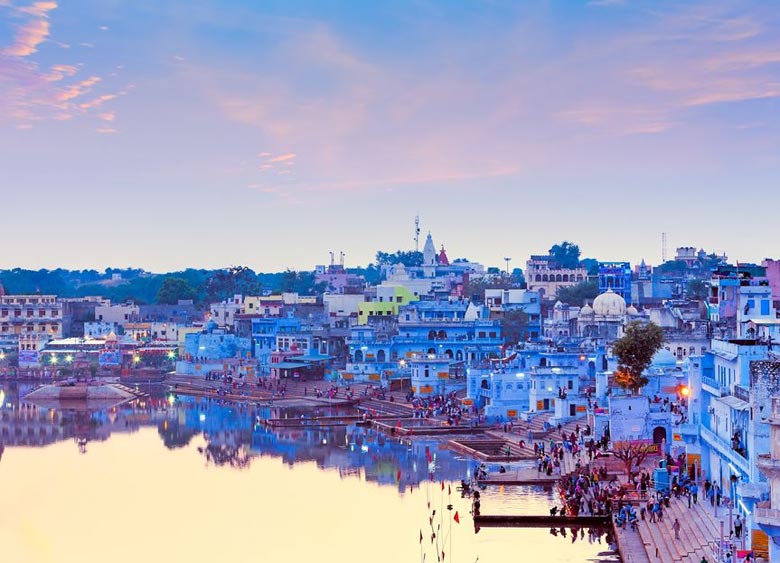
Pushkar is best known for two things: Brahma Temple, one of the few temples on earth dedicated to the Hindu god of creation, and its annual Camel Fair. The fair attracts an interesting mix of devout Hindus and backpackers, though it’s ideal for anyone with an interest in Indian culture and religion or just those looking to take a day trip from Jaipur.

Private walking tours of Pushkar focus on its spiritual and cultural facets, while sightseeing excursions come with a guide and transportation.
Things to Know Before You Go
  • Wear sunscreen and comfortable shoes; Pushkar is sunny most of the time and a good part of the town is pedestrian-only.
  • Most Pushkar temples are not open to foreigners or non-Hindus.
  • Pushkar’s dusty roads and many steps make it difficult to navigate with a wheelchair.
  • Beware of “special lassis” in restaurants; they may contain a legal cannabis-based mixture known as bhang, which has psychedelic effects.
  • Some priests wait by the lake here and try to get unsuspecting tourists to pay for rituals. If someone clad in white offers you a flower to throw into the lake, you may wish to decline.

How to Get There


Pushkar is a few hours’ drives from Jaipur. The easiest way to get there is by car or as part of an organized tour. Travelers can also take a train from Delhi or Jaipur to nearby Ajmer Junction and then switch to a taxi or bus directly to Pushkar.

When to Get There

Pushkar is a year-round destination. It’s at its busiest during the annual Camel Fair, which takes place over a week during the holy month of Kartik (usually in October or November). During this time, hotel rates spike and desert camps open up around the area to provide additional lodging. April to June can be unbearably hot, with temperatures hovering well over 100°F (38°C), while December–February offers relatively cooler temples and fewer tourists.
Pushkar Camel Fair

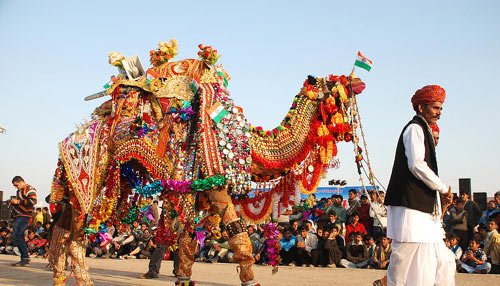
Pushkar’s biggest draw is its annual camel fair, the largest in the world. Camel traders come to the town from across Rajasthan to sell their camels (and horses) and camelid accessories. There are also plenty of festivities, from mustache-length competitions to camel beauty contests, along with living music, dance, and amusement park-style attractions.

                                        HISTORY

Once Lord Brahma came to know that a demon, Vajranash, was killing people here so  Lord Brahma intoned a mantra on a lotus flower and killed the demon. During this process,pushkar camel fair,pushkar resort,pushkar mela
the parts of flower fell on three places which were later known as Jestha, Madhya and KanisthaPushkar.
Later accompanied by Brahmanas and other devas, or demigods, Lord Brahma went to Puskar to perform a sacrifice. To perform his yajna peacefully without being attacked by the demons, he created the hills around the Pushkar Ratnagiri in the south, Nilgiri in the north, Sanchoora in the west and Suryagiri in the east and positioned demigods there to protect the yajna performance. Such Yajna sacrifices are to be performed along with one’s wife, so when the arrangements for the sacrifice were complete, Lord Brahma sent Narada rsi, the sage among the devas, to bring Sarasvati, Lord Brahma’s consort. But Sarasvati was not ready to leave, so Narada returned to Puskar alone.
According to astrological calculations, the sacrifice had to begin at once, so Brahma asked Indra, the king of the heavenly planets, to provide him a suitable wife to assist in the sacrifice. Lord Indra chose a cowherd girl, but the sacrifice required that the girl is of the brahmana caste. So the devas purified the girl, or elevated her caste, bypassing her through a cow (into the cow’s mouth and out the other end), because in Vedic culture cows are considered pure and of the same caste as the Brahmanas. The girl then became known as Gayatri, “one who was pulled through a cow.” She married Brahma and performed the yajna. When Saraswati arrived and saw that Brahma had married without her permission, so she cursed Brahma saying that he would be worshiped in Pushkar only. Saraswati (Savitri) also cursed Indra to be easily defeated in battles, Lord Vishnu to suffer the separation from his wife as a human, the fire-god Agni who was offered the yajna to be all-devouring and the priests performing the yajna to be poor. Endowed by the powers of yajna, Gayatri, however, diluted Saraswati ‘s curse, blessing Pushkar to be the king of pilgrimages, Indra would always retain his heaven, Vishnu would be born as the human Rama and finally unite with his consort and the priests would become scholars and be venerated. Enraged Saraswati (Savitri) went and established a temple on top of Ratnagiri, the hill a little south of Pushkar. Today pilgrims to Puskar can visit temples of both Sarasvati Devi and Gayatri Devi.  Sarasvati Devi is also present in this world in the form of a river. Five branches of that river Sarasvati, Supra, Candra, Kanaka, and Nandaflow in the Puskar area, but at present, they are invisible to ordinary eyes.
I HOPE YOU LIKE THE INFORMATION ABOUT PUSHKAR ALSO FORWARD THE BLOG TO THE WHO ARE PLANNING TO GO PUSHKAR 

                                                                                        ↠↠↠↠THANKS↞↞↞↞

It is also said that Lord Varaha appeared  at Varaha ghat here, and Lord Rama came and bathed here.  The sage Parasara is said to have been born here. His descendants, called Parasara Brahamans, are still found in Pushkar and the surrounding area.Address:

EKLING JI UDAIPUR

                       ↞Eklingji Temple, Udaipur

Eklingji Temple is one of the most popular temples of Rajasthan and is sited at a distance of 22 km to the north of Udaipur. Eklingji Temple is dedicated to the Lord Shiva of the Hindu religion and its brilliant architecture drives several tourists here every year. This double-storied temple looks magnificent with its pyramidal style of roof and uniquely carved tower. The outer walls of the temple are stretched with steps that lower touching the serene waters.
Established in 734 A.D. by Bappa Rawal, Eklingji is purported to have been the ruling idol of Mewar rulers. On entering this hall, you would see a beautiful silver image of Nandi and inside the temple, there are two other images of Nandi carved in black stone and brass respectively. This temple is filled with an enthralling fragrance and is known for a striking four-faced idol of Eklingji (Lord Shiva) that is made out of black marble. Its height ranges around 50 feet and its four faces depict four forms of Lord Shiva. The Shivlinga garlanded by a silver snake is a major tourist attraction.
The magnificent architecture of Eklingnath Temple is simply remarkable. The double-storied temple looks awesome with its pyramidal style of roof and distinctly carved tower. The outer walls of the temple are stretched with steps that descend touching the serene waters. Inside the complex, the main temple is a huge pillared hall or ‘mandap’ that is sheltered by a hefty pyramidal roof. On entering this hall, you will be welcomed by a silver image of Nandi. In the temple, there are two other images of Nandi carved in black stone and brass respectively. You would find this temple full of mesmerizing fragrance.

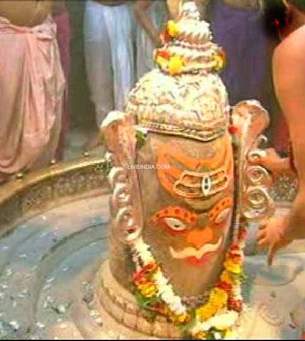
The temple boasts of a striking four-faced idol of Eklingji (Lord Shiva) that is made out of black marble. Its height ranges around 50 feet and its four faces depict four forms of Lord Shiva. The east-facing part is recognized as Surya, the west-facing part is Lord Brahma, the north-facing part is Lord Vishnu and the south-facing part is Rudra i.e. Lord Shiva himself. The zenith of the multifaceted idol is known as ‘Yantra that stands for the ultimate reality. The Shivlinga (Phallic form of Lord Shiva) garlanded by a silver snake, acquires the major attraction of people. 


Being sited in the middle, Shivlinga is encircled by Goddess Parvati, Lord Ganesha, and Lord Kartikay. Inside the temple complex, you would find statues of Goddess Saraswati and Goddess Yamuna. The main temple also boasts of heavy silver doors, which depicts Lord Ganesha and Lord Kartikay guarding their father. To the north of Eklingji temple, there are two tanks namely Karz Kund and Tulsi Kund. The water of these tanks is consumed during the services of the Lord. The festival of Shivratri is observed here with full gusto and fervor. At this time, the image of Lord Shiva is adorned with jewelry.

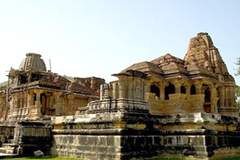
Enrooted in the religious roots, the town comprises around 108 small and big temples. Near to Eklingji Temple, you can also trace various temples that are dedicated to Ambika Mata, Kalki, and Lord Ganesha. One more temple by the name of Nathon Ka Mandir that dates back to the 10th century catches the attraction. Lakulish temple is a fine temple that was built in 971. It is the exclusive temple of the Lakulish sect in India. Sas- Bahu temple is another temple that is all raised in marble of the 11th century. The Jain Temple of Adbhudji is made in black marble which dates back to the 15th century.

Amongst other temples of Kailashpuri (better known as Eklingji), temples of Pataleshwar Mahadeo, Arvada Mata, Rathasan Devi, and Vindhyavasini Devi are worth mentioning. The wonderful architecture of these temples makes the onlooker ponder over the artistry of those times. The city of Eklingji or Kailashpuri is located amidst a beautiful valley on the lands of Rajasthan that houses some of the marvelous temples of India. While planning your trip to Udaipur, don’t forget to include Eklingji in your itinerary, otherwise, you would be at a miss.

Location:22 km in the north of Udaipur, On National Highway No.8

Built by: Bappa Rawal

Built in:734 A.D

Dedicated to: Lord Shiva
Highlights:50 feet high image of Lord Shiva
How to reach: One can easily reach Eklingji Temple from the city by taking regular buses or by hiring Taxis.

Ranakpur Sightseeing (2019)

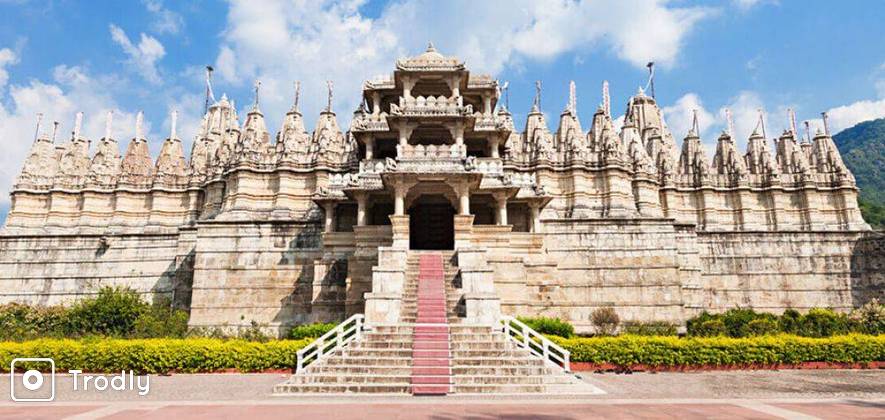
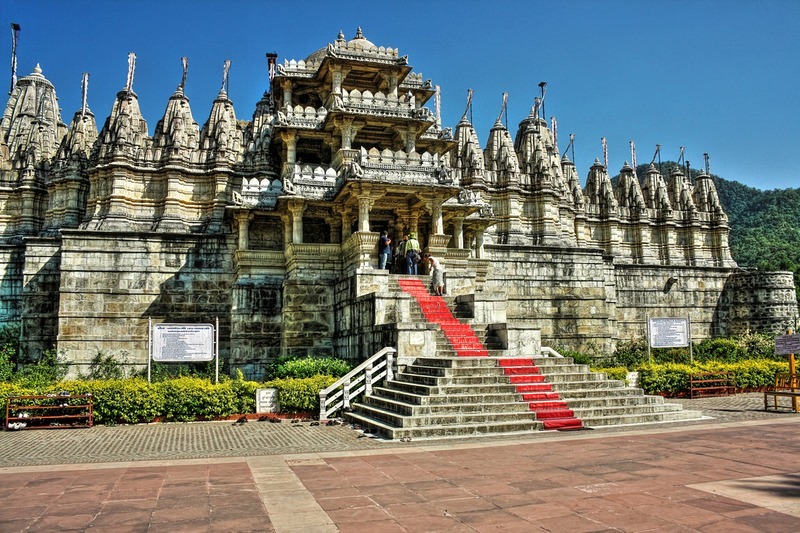
Ranakpur is a small village in the Pali district of Rajasthan. Located on the western side of the Aravalli Range, Ranakpur rests midway Udaipur and Jodhpur. This village is famous for the 15th-century Ranakpur Jain Temple, which holds immense religious significance for the Jains. The grandeur of the temple is reflected in its magnificent high pillars. The backdrop of endless desert and the beauty of the temples are mesmerizing.

Tourist Places In And Around Ranakpur The Sun Temple, also known as the Surya Narayan Temple, dedicated to Lord Sun, is quite popular amongst the tourists visiting Ranakpur. The carvings of celestial bodies, horses and warriors on the temple walls depict the art of the natives who designed the polygonal wall of the temple. In this temple, the idol of the Lord Sun is seen riding the chariot. Travelers coming to Ranakpur often visit Sadri, which is a popular pilgrimage center of the Jain community. Another prominent attraction of the place is the Muchhal Mahavir Temple, which is dedicated to the Hindu Lord Shiva. It is situated at a distance of 5 km from Ghanerao in the Kumbhalgarh Sanctuary. The highlighting feature of this temple is that the idol of the Hindu Lord Shiva is shown with a mustache. The village of Ghanerao itself has many Hindu temples. The Muchhal Mahavir Temple and the Gajanand Temple are the most popular amongst the 11 Jain temples found in the region. The village of Narlai, located at a distance of 6 km from Ranakpur, is also known for the Hindu and Jain temples of the region. The architecture of the temples and the murals found inside the temple are appreciable. Another prominent attraction of the region is the historical site, named Kumbhalgarh. The Mewar fortress located in this place stands tall, the walls of which extend across a wide area. Perched at an altitude of 1100 m above sea level, this place offers the mesmerizing views of the Aravalli Range and the splendid sand dunes of the Thar Desert. The fort has now been converted into a museum and is open for the general public. How To Reach Ranakpur The Maharana Pratap Airport at Udaipur is the closest airport which serves the village of Ranakpur. Indira Gandhi International Airport at New Delhi is the nearest international airport from where travelers can avail connecting flights to this destination. The nearest railhead Falna is located at a distance of 35 km from this place. Cab services and taxi services are easily available from the station. Private and state-owned bus services are available from the nearby cities of Ranakpur. Ranakpur Weather Winters are considered the best time for planning trips to Ranakpur. The temperature is ideal for sightseeing during this time. The region gets relief from the dry and hot summers during monsoons. Although rains are scanty here, the temperature of the place drops down during this time.

whether —-
Ranakpur 35oC / 96oF Sunny Wind: W 21 km/h Best Season

Ways to go RANAKPUR —
By Road Bus services to Ranakpur are available from the nearby cities like Udaipur, Jaipur, and Jodhpur.

By Train Nearest railhead to Ranakpur is the Falna Railway station located at a distance of 35 km. The important cities of India including New Delhi and Mumbai are directly linked to the railway station at Falna. Travelers can easily avail taxi and bus services from the railway station.

By Air Maharana Pratap Airport or Dabok Airport, located at Udaipur at a distance of 106 km, is the nearest airport to Ranakpur. This airport is well connected to all the major cities of India. International travelers can avail connecting flights to the airport at Udaipur from the Indira Gandhi International Airport, New Delhi.

facts  — “A Spiritual Oasis in Aravali”

Ranakpur is a small quaint town nestled amid the secluded valley of Aravali Ranges in Rajasthan. Situated around 96 km North of Udaipur in Pali district, it is an important destination for Jain pilgrims. The place presents a unique spectacle of verdant greenery and gushing streams, an unusual sight in Rajasthan. Immersed in the vibrant culture with a myriad of enrapturing beauty in store, Ranakpur has made its way on the list of must-visit destinations in Rajasthan. 

It is named after Rana Kumbha, who donated some land for the place.

There are many temples dedicated to different Tirthankaras in Jainism like Adinatha, Parasnath and Chaumukha Temple with marvelous architectures. Rightly nicknamed as ‘A spiritual oasis in Aravalli’, Ranakpur is a place with a mesmerizing beauty that will leave you awe-inspired with a rejuvenated soul.
I hope guys you liked the information  about RANAKPUR check this blog and enjoy your trip
and suggest the next topic.
                                                 THANK YOU

↠↠↠↠↠↠↠↠↠↠↠↠↠↠↠↠↠↠↠↠↠↠↠↠↠↠↠↠↠↠↠↠↠↠↠


Umaid Bhawan

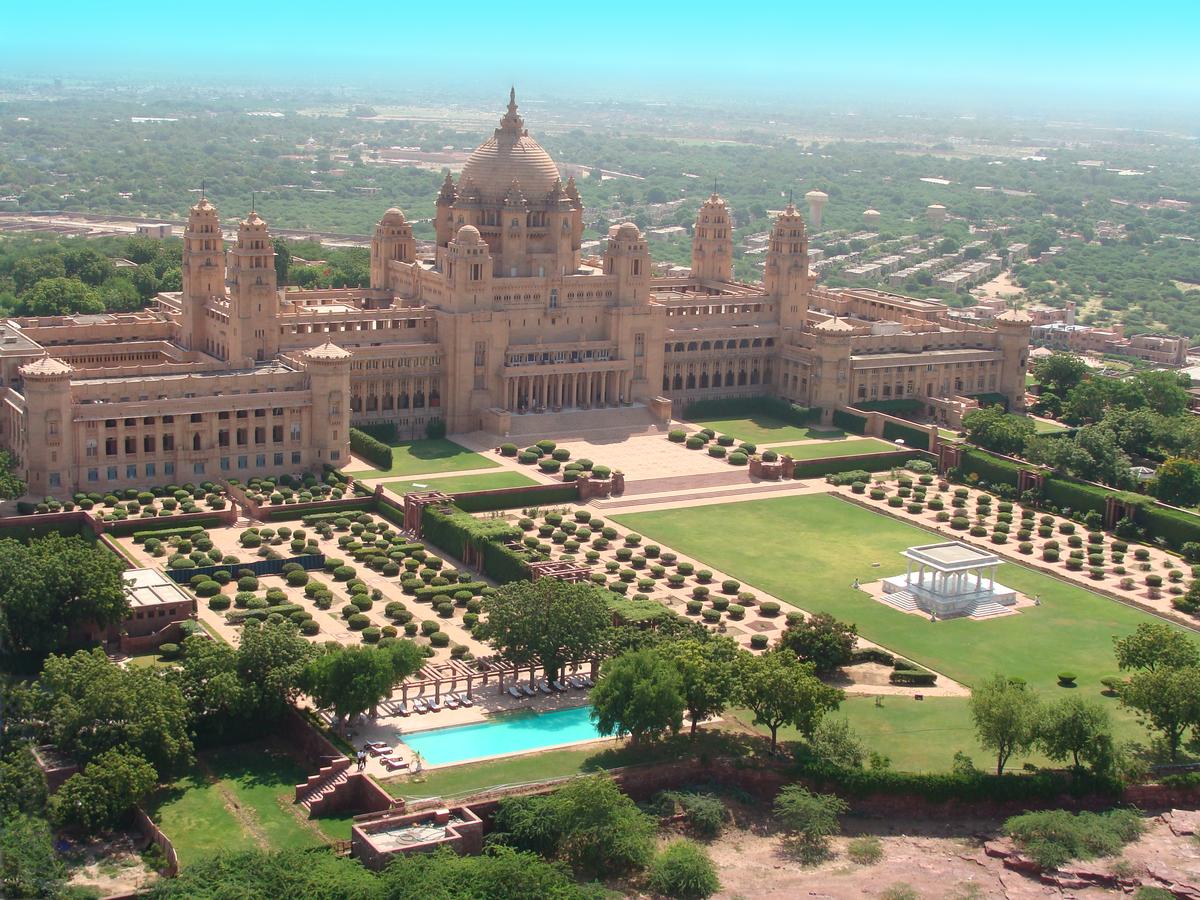
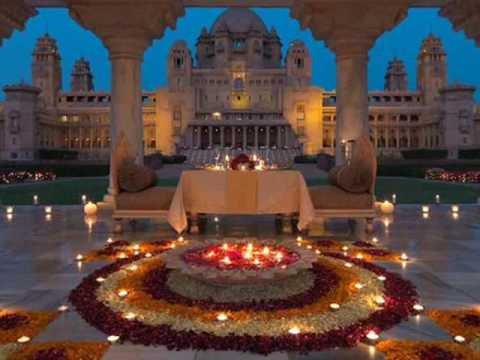
          ↞ Umaid Bhawan Palace in Jodhpur↠

Guys this article is all about the heritage place located in Jodhpur Umaid Bhawan. In this article, I am going to give you detailed information about a beautiful place.
This palace became more nowadays due to the wedding ceremony of the popular Hollywood and Bollywood star Priyanka Chopra and the rap star and actor Nick Jonas. This wedding ceremony was held on 1 December 2018. Umaid Bhawan Palace is one of the largest private residences in the world. This is the only palace to have a working elevator in India. Located in Jodhpur, a part of this palace is a heritage hotel today. The palace has 347 rooms, which were occupied by the royal family of Jodhpur royals in the past. Today, it is one of the best luxury hotels in India and has been recognized for the same by numerous entities. The palace was built in Beaux Arts Style in a mixture of western and eastern architectural styles. No trip to Jodhpur is complete without spending a few hours at this palace. If you wish to enjoy the real beauty of the palace, visit during winter mornings.


History

History of building the Umaid Bhawan Palace is linked to a curse by a saint who had said that a period of drought will follow the good rule of the Rathore Dynasty. Thus, after the end of about 50-year reign of Pratap Singh, Jodhpur faced a severe drought and famine conditions in the 1920s for a period of three consecutive years. The farmers of the area faced with famine conditions sought the help of the then king Umaid Singh] who was the 37th Rathore ruler of Marwar at Jodhpur, to provide them with some employment so that they could survive the famine conditions. The king, in order to help the farmers, decided to build a lavish palace. He commissioned Henry Vaughan Lanchester as the architect to prepare the plans for the palace; Lanchester was a contemporary of Sir Edwin Lutyens who planned the buildings of the New Delhi government complex. Lanchester patterned the Umaid Palace on the lines of the New Delhi building complex by adopting the theme of domes and columns.[3] The palace was designed as a blend of western technology and Indian architectural features.
The palace was built at a slow pace as its initial objective was to provide employment to the famine-stricken farmers in the area. The foundation stone was laid in 1929. About 2,000 to 3,000 people were employed in its construction.] Occupation of the palace by the Maharaja came after its completion in 1943, and close to the period of Indian Independence. There was some criticism for embarking on an expensive project but it had served the main purpose of helping the citizens of Jodhpur to face famine and drought.] The estimated cost of building the palace was Rs 11 million. When it opened in 1943 it was considered as one of the largest royal residences in the world.

Museum  

Briefly describe the history of the museum, its collection, and donors.
Umaid Bhawan Palace, last of India’s great palaces, and one of the largest in the world was commissioned by Maharaja Umaid Singh (1918 – 1947) on Chittar Hill, southeast of the city between 1929 and 1944. Named after him, the palace is today the home of his grandson, Maharaja Gaj Singh II of Jodhpur. It is also in part a luxury hotel of immense grandeur. Built as a drought relief measure amongst many other public buildings, dams, roads and schools, the palace construction generated employment for over three thousand people for fifteen years at a total cost of rupees 94,51,565. Designed by Henry Vaughan Lanchester, a renowned Edwardian architect, the Palace integrates many Indian architectural styles still imbuing Rajput traditions. This magnificent edifice, with three hundred and forty-seven rooms, is one of the world’s largest private residences. Converted to a hotel in 1978, the palace was thrown open to the public at large. The private museum attached to the palace contains a special exhibition on Maharaja Umaid Singh and the making of Umaid Bhawan Palace. Housed here is also a special collection of antique clocks. ‘The LifeStyle Gallery’ recalls life in the palace in the 40s and 50s with displays of Art Deco furniture, dining and writing sets, and a special sporting section. ‘The Legacy Continues’ Gallery is dedicated to the Royal family.

Vintage cars 

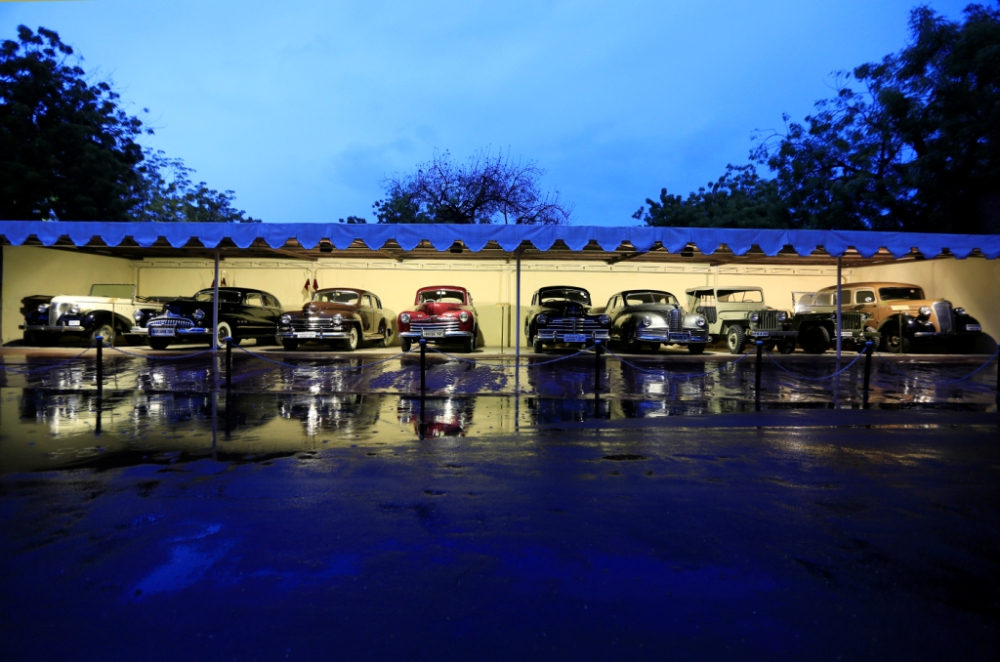
Jodhpur is the city of royals and there’s one thing that adds to the grandeur of the city, and makes it even more fascinating is the fleet of Royal Vintage cars in the city. Isn’t it the sight of a lifetime when all the vintage cars in Jodhpur crawl out of their spaces and are displayed in full splendor. Every year at the Vintage Car Rally, they are lined up at the Umaid Bhavan, with their occupants and then drive down to the Polo Grounds followed by the grand welcome with much fanfare and commentary. That’s the moment one can cherish once in a year, but there’s this one place in Jodhpur- Ajit Bhawan Palace, which has its own fleet of royal, classic vintage cars ! For all the Vintage and Classic Car Lovers from Around the Globe, the Palace of Ajit Bhawan reserves a special experience on your trip to Jodhpur; it is the “Vintage and Classic Car Collection” of Ajit Bhawan, Jodhpur.  The Collection includes more than a dozen of splendid vintage cars.
Guys I hope you liked the information about the UMAID BHAWAN if so please comment down the next topic you would like to get information about .
soon movies links comming
Thanks

About rajasthan


                            About  Rajasthan

                                                         Introduction

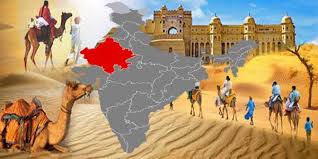
Rajasthan, state of northwestern India, located in the northwestern part of the Indian subcontinent. It is bounded to the north and northeast by the states of Punjab and Haryana, to the east and southeast by the states of Uttar Pradesh and Madhya Pradesh, to the southwest by the state of Gujarat, and to the west and northwest by the provinces of Sindh and Punjab in Pakistan. The capital city is Jaipur, in the east-central part of the state.


Meaning of Rajasthan

Rajasthan, meaning “The Abode of the Rajas,” was formerly called Rajputana, “The Country of the Rajputs” (sons of rajas [princes]). Before 1947, when India achieved independence from British rule, it comprisedsome two dozen princely states and chiefships, the small British-administered province of Ajmer-Merwara, and a few pockets of territory outside the main boundaries.


People

Most of Rajasthan’s population consists of Indians of various social, occupational, and religious backgrounds. The Rajputs (various clans of landowning rulers and their descendants), though representing only a small percentage of Rajasthan’s residents, are perhaps the most-notable section of the population; indeed, the state draws its name from that community. In terms of caste structure, the Brahmans (highest caste) are subdivided into many gotras (lineages), while the Mahajans (trading caste) are subdivided into a bewildering number of groups. In the north and west the Jats (peasant caste) and Gujars (herding caste) are among the largest agricultural communities.

Cultural Life

The arts

Literature

Rajasthan has a rich tradition of both oral narrative and written literature. The most-famous song is “Kurja,” which tells the story of a woman who wishes to send a message to her absent husband by a kurja (a type of bird), who is promised a priceless reward for his service. In the literary tradition, Chand Bardai’s epic poem Prithviraj Raso (or Chand Raisa), the earliest manuscript of which dates to the 12th century, is particularly notable.

Dance

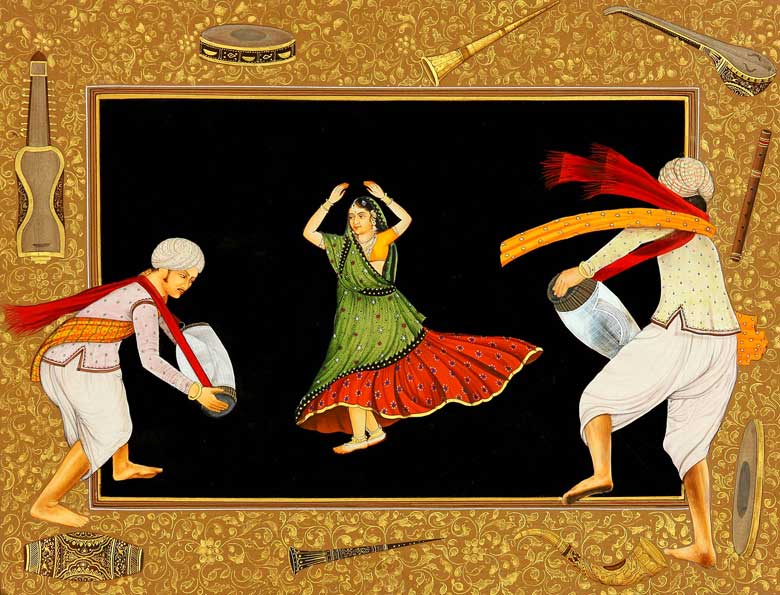
The typical dance of Rajasthan is the ghoomar, which is performed on festive occasions by only women. Other well-known dances include the geer, which is performed by men and women; the panihari, a graceful dance for women; and the kacchi ghori, in which male dancers ride dummy horses. Performances of khyal, a type of dance-drama composed in verse with celebratory, historical, or romantic themes, is also widely popular.


                             Festivals

Cultural life in Rajasthan is characterized by numerous religious festivals. Among the most popular of those celebrations is the Gangaur festival, during which clay images of Mahadevi and Parvati (representing the benevolent aspects of the Hindu mother goddess) are worshipped by women of all castes for 15 days and are then taken out to be immersed in water. Another important festival, held at Pushkar near Ajmer, takes the form of a mixed religious festival and livestock fair; Hindu pilgrims come seeking salvation during the celebration, while farmers from all corners of the state bring their camels and cattle to show and sell. The tomb of the Sufi mystic Khwājah Muʿīn al-Dīn Chishtī at Ajmer is one of the most-sacred Muslim shrines in India. Hundreds of thousands of pilgrims, many from foreign countries, visit the shrine each year on the occasion of the saint’s ʿurs (death anniversary).
Guys comment down below about how was the blog and do share this blog and keep supporting.

TO BUY RAJASTHAN PAINTING

Design a site like this with WordPress.com
Get started